

How to choose the right packaging adhesive for my product?
Leave a message

Hey there! As a packaging adhesives supplier, I get asked all the time, "How do I choose the right packaging adhesive for my product?" It's a great question, and I'm here to break it down for you in a way that's easy to understand.
First off, let's talk about why choosing the right adhesive is so important. The adhesive you use can make or break your packaging. It needs to hold your product securely in place, protect it from damage during transit, and also be easy to use and cost - effective. A wrong choice can lead to products coming loose, getting damaged, or even causing delays in your shipping process.
Consider Your Product
The first step in choosing the right packaging adhesive is to consider the nature of your product. Is it heavy or light? Fragile or sturdy? For example, if you're packaging something heavy like a set of tools, you'll need an adhesive that can handle a lot of weight. On the other hand, if you're packaging something delicate like glassware, you'll want an adhesive that's gentle but still provides a strong hold.
Let's say you're dealing with electronics. These products are often sensitive to heat and chemicals. So, you'll need an adhesive that won't generate too much heat during the bonding process and is chemically inert. Some adhesives can release fumes or cause corrosion, which is a big no - no for electronics.
Packaging Material
The type of packaging material you're using also plays a huge role in adhesive selection. Different materials have different surface properties, and an adhesive that works well on one material might not work on another.
If you're using cardboard boxes, a good old - fashioned hot - melt adhesive can be a great choice. It bonds quickly and strongly to cardboard, and it's relatively easy to apply. You can use a hot - melt gun to apply it directly to the box flaps or seams.
For plastic packaging, you might want to look into solvent - based adhesives. These adhesives can form a strong bond with plastic surfaces. However, they do have some drawbacks. They can be flammable and emit strong fumes, so proper ventilation is a must.
Environmental Conditions
Think about the environmental conditions your product will be exposed to during storage and shipping. If your product will be stored in a humid environment, you'll need an adhesive that's resistant to moisture. Some adhesives can break down when exposed to high humidity, which can lead to the packaging coming apart.
On the other hand, if your product will be shipped in extreme cold or hot temperatures, you'll need an adhesive that can withstand these conditions. For example, some adhesives become brittle in cold temperatures and lose their bonding strength.
Application Method
The way you plan to apply the adhesive is another important factor. Some adhesives are designed for manual application, while others are better suited for automated processes.
If you have a small - scale operation and you're applying the adhesive by hand, you'll want an adhesive that's easy to handle. For example, a pressure - sensitive adhesive can be a great option. You just need to peel off the backing and stick it in place.
If you have a large - scale production line, you might want to consider an adhesive that can be applied using automated equipment. These adhesives are often formulated to work well with specific types of machinery, such as spray guns or roller coaters.
Cost
Let's face it, cost is always a factor. You want to find an adhesive that provides the right level of performance at a reasonable price. However, don't just go for the cheapest option. A low - cost adhesive might not provide the necessary strength or durability, which can end up costing you more in the long run if your products get damaged.
Specific Product Examples
Now, let's look at some specific products and the adhesives that are suitable for them.
Plastic Air Cushion
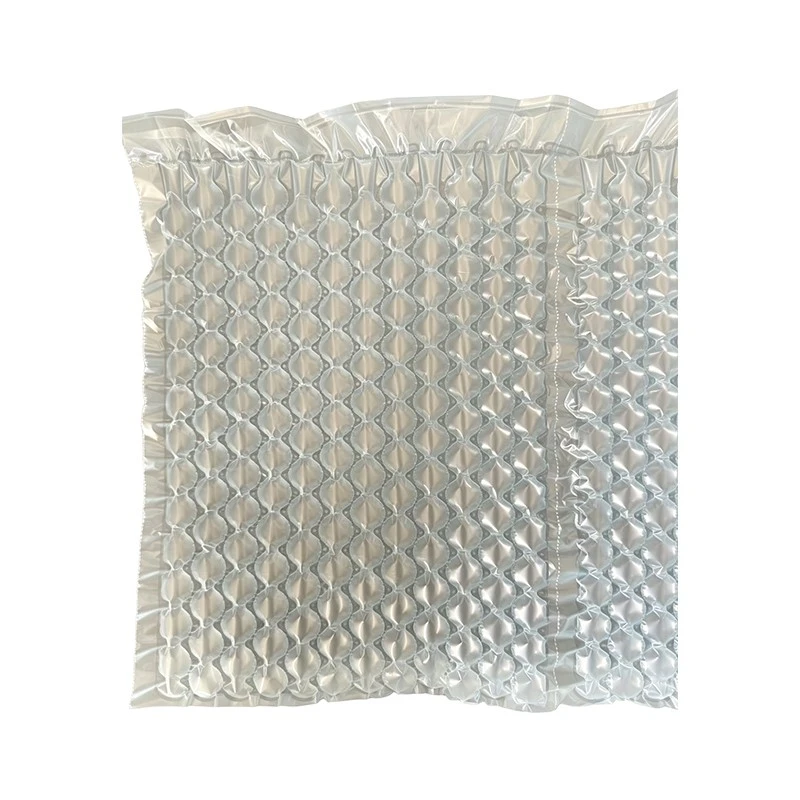
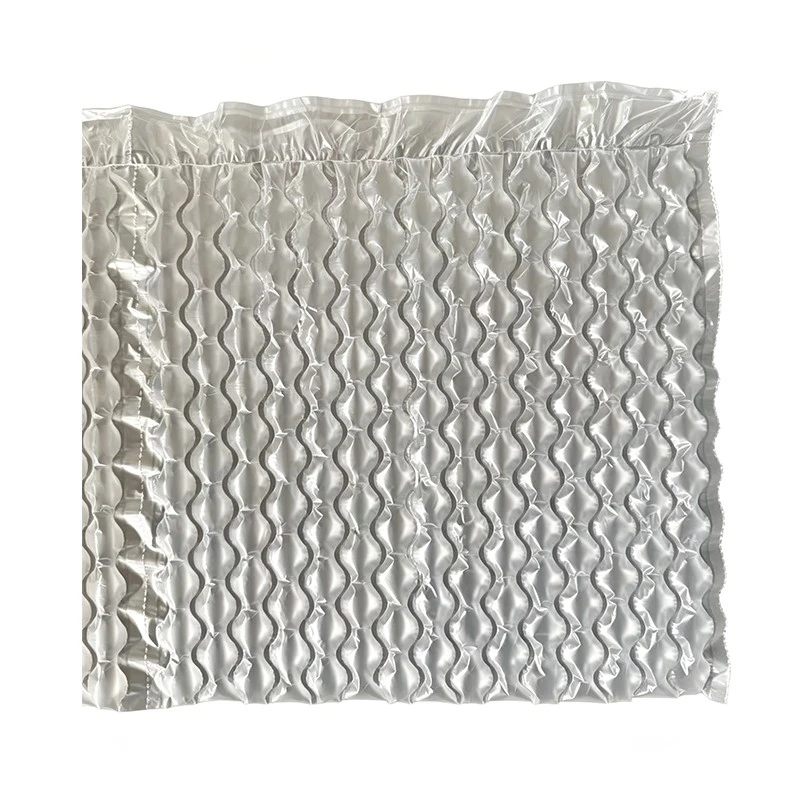
If you're using Plastic Air Cushion for packaging, you'll need an adhesive that can bond well to plastic and also provide a seal that won't let air escape. A silicone - based adhesive can be a good choice here. It has excellent flexibility and can form a tight seal on the plastic surface.
Air Pillow Material
For Air Pillow Material, a polyurethane adhesive can be effective. It offers good adhesion to the material and can withstand some movement without coming apart. This is important because air pillows are often jostled around during shipping.
Air Pillow Bubble Wrap
When it comes to Air Pillow Bubble Wrap, a water - based adhesive can be a great option. It's environmentally friendly, easy to clean up, and can provide a strong bond to the bubble wrap material.
Testing
Once you've narrowed down your options, it's a good idea to do some testing. You can test the adhesive on a small sample of your product and packaging material. Make sure to simulate the real - world conditions your product will face, such as temperature, humidity, and handling.
Check for things like bond strength, how easy it is to apply, and whether the adhesive causes any damage to your product. If possible, test the adhesive over a period of time to see how it holds up.
Conclusion
Choosing the right packaging adhesive for your product is a multi - step process. You need to consider your product, the packaging material, environmental conditions, application method, and cost. By taking the time to evaluate these factors and doing some testing, you can find an adhesive that will keep your products safe and secure during transit.
If you're still not sure which adhesive is right for your product, don't hesitate to reach out. We're here to help you make the best choice for your packaging needs. Whether you have a small - scale business or a large - scale production line, we can provide you with the right adhesive solutions. Contact us to start a discussion about your specific requirements and let's find the perfect adhesive for your product together.
References
- Packaging Adhesives Handbook, 2nd Edition
- Adhesive Technology for Packaging Applications, by John Doe
- Best Practices in Packaging Adhesive Selection, Industry White Paper


